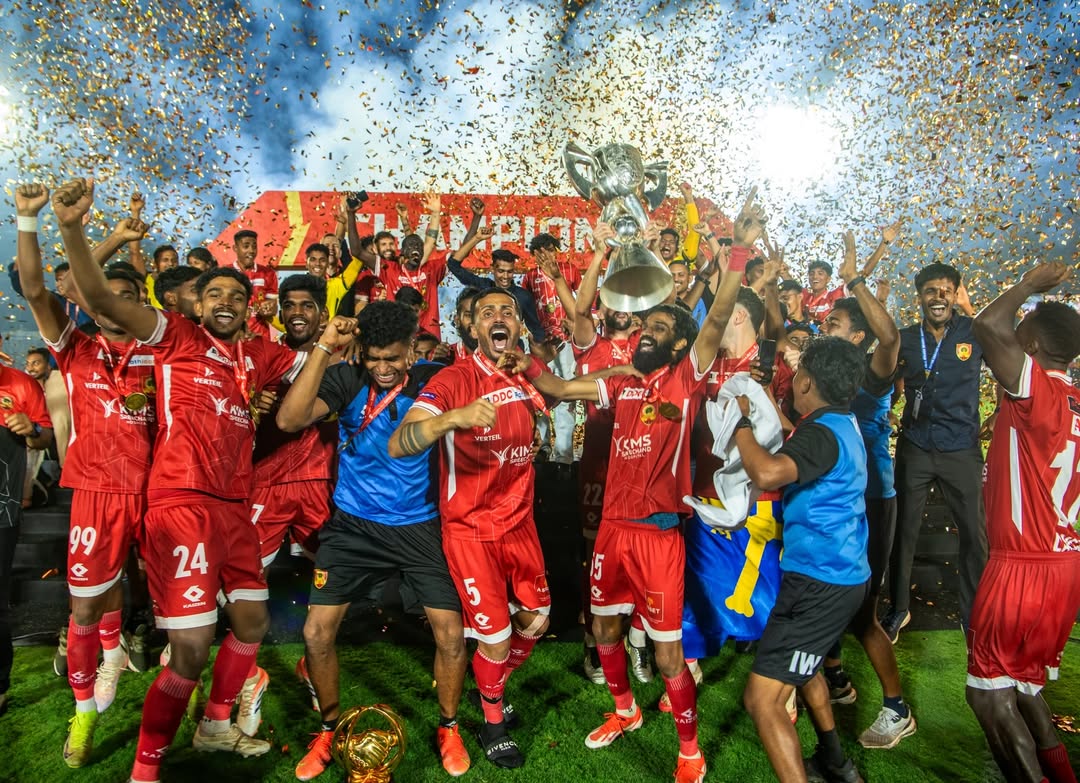


Season 2 of Super League Kerala is over, and we have a new champion, Kannur Warriors FC. 79 days long season saw 33 matches across six stadiums. 109 Kerala players were part of the league, and Jawahar Municipal Stadium of Kannur finally hosted some high-intensity matches after a hiatus of 14 years. The football was sharper, the crowds louder, the conversations longer, and the emotional investment far deeper than the inaugural season. It was no longer just about launching a new tournament. It was about proving that Kerala could sustain a serious, culturally rooted football league of its own. Season 2 didn’t answer every question, but it asked the right ones, and that alone marked growth.
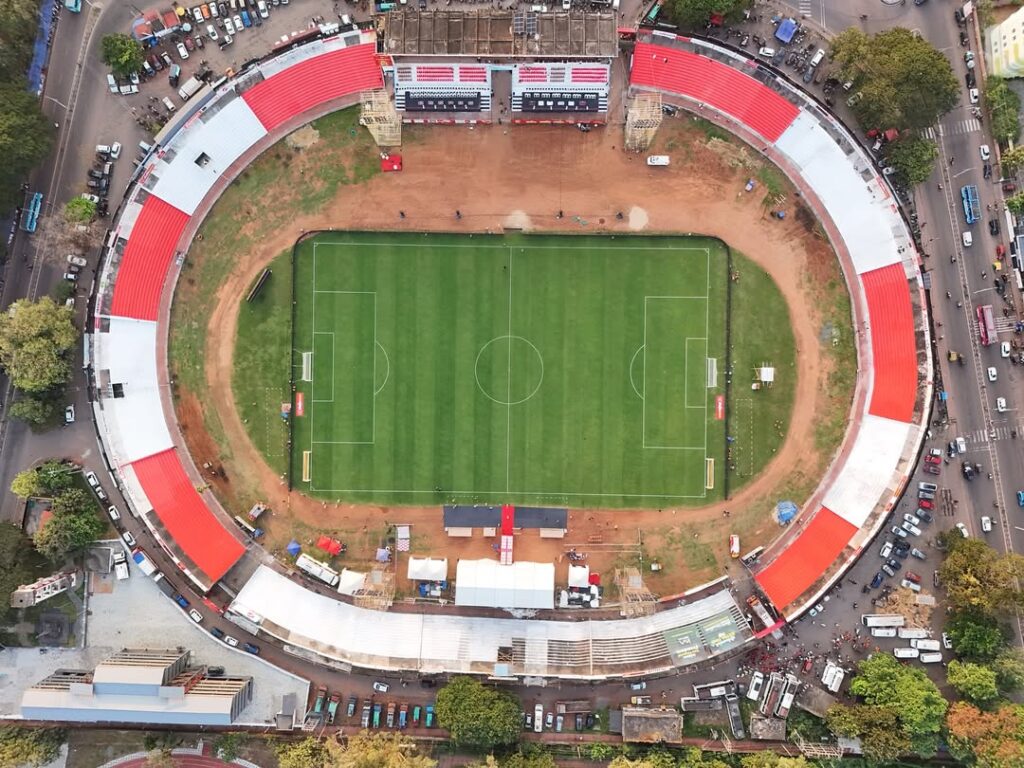
One of the biggest positives was how certain home grounds finally began to feel like true fortresses. Kannur Warriors and Thrissur Magic played their home matches at the local venues, unlike last season, when they had to play their matches in other districts. This switch helped them to develop a good fan base, and the result was visible on the stands. The Jawahar Municipal Stadium was painted in the colors of the team, and in Thrissur, the entire turf was relaid.
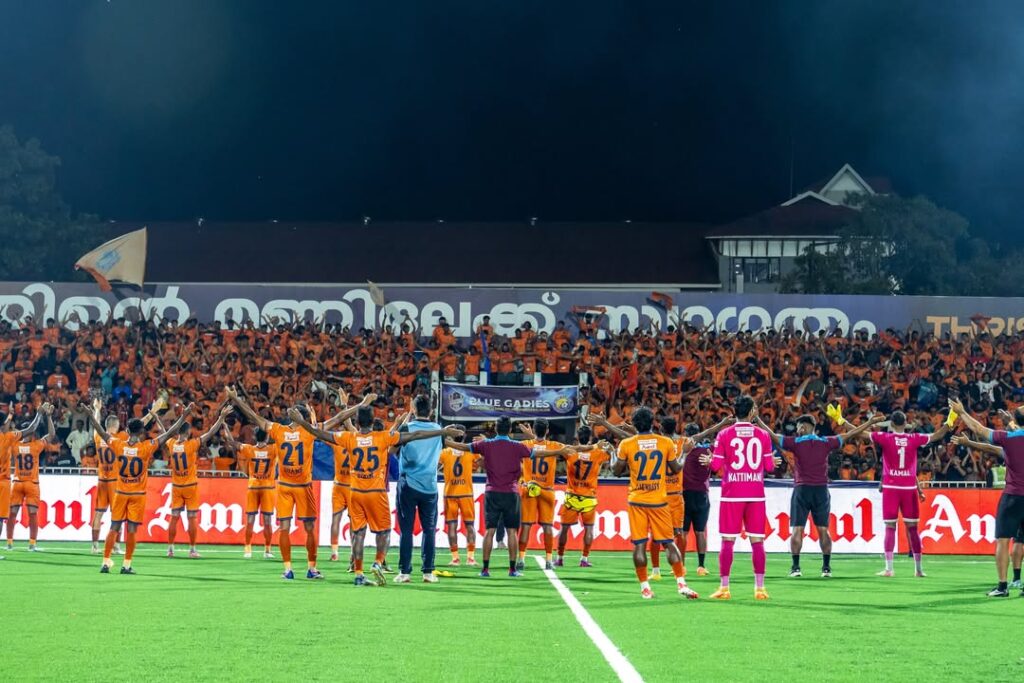
Closely linked to this was the visible evolution of fan culture across the league. Season 2 saw chants becoming more rigid and rhythmic rather than random noise. Supporter groups stayed together, sang together, and crucially, continued supporting even when their teams conceded. This shift from casual spectatorship to committed fandom is how leagues grow roots. In Kannur, the crowd backed the team relentlessly, making opponents uncomfortable in a way only genuine home support can. Thrissur went even further. Their fans were not just loud, they were organised. Chants were repeated, sections moved together, and the atmosphere was recognisable even on broadcast. However, the best fan group was undoubtedly Ultras Malappuram. They came in massive numbers, not just for the home matches but also for away matches. That sense of identity, where a club’s presence can be felt before the first whistle, even in the away matches, is priceless and extremely rare in Indian football.
Another major hit was how the league expanded beyond the stadium and entered everyday football conversations. More YouTube channels, podcasts, and social media pages began covering SLK with regular post-match discussions, tactical debates, and unapologetic fan opinions. TV Channels like MediaOne provided good coverage of the Super League Kerala-related news. The league stopped being something you watched once every few days and became something people talked about daily. That organic media ecosystem, driven largely by fans rather than polished studios, gave SLK authenticity and reach that marketing budgets alone cannot buy.
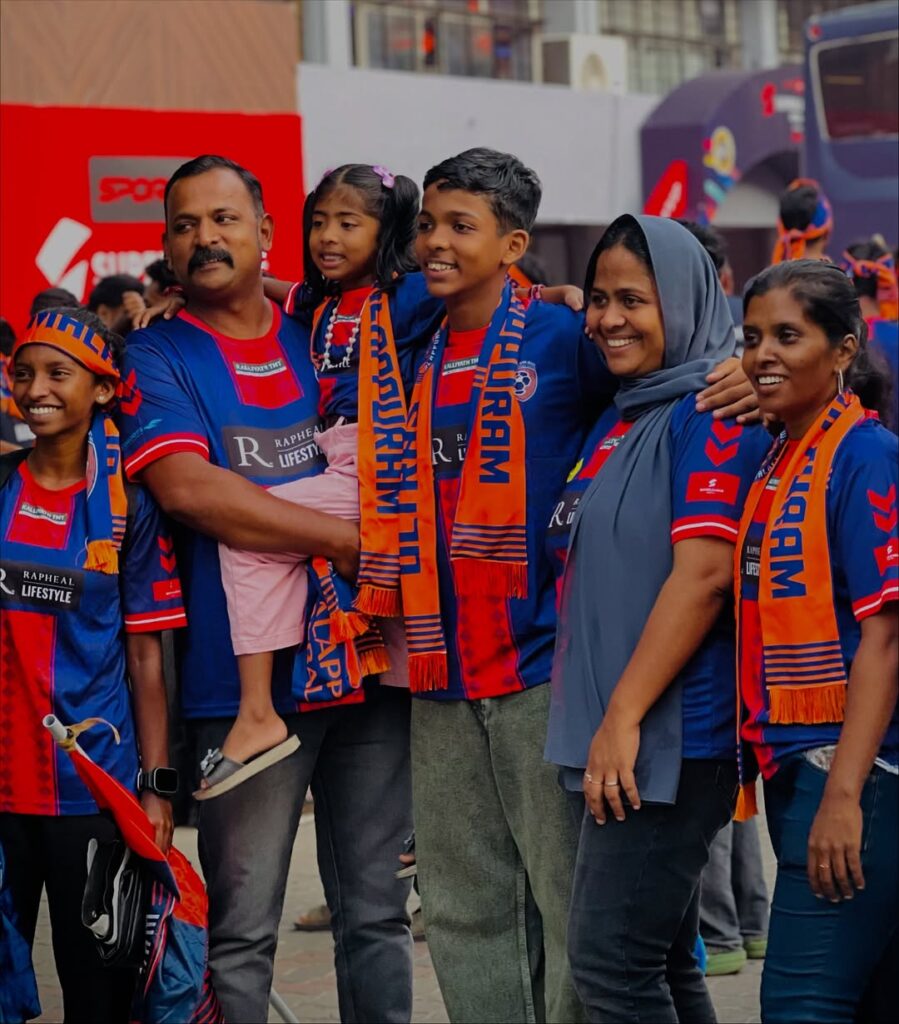
Perhaps the most encouraging sight of the season was the noticeable increase in women attending matches. Groups of women, families, and couples were visible across multiple venues, not just sitting quietly but actively engaging with the game. This reflects improved perceptions of safety, a healthier stadium atmosphere, and football being presented as inclusive entertainment rather than a male-only space. In the long run, this single change could have the biggest impact on the league’s sustainability.
Broadcast quality, on paper, also improved. Camera work, graphics, and commentary showed intent and effort. However, reliability issues on some matchdays, particularly on online streaming, became a recurring frustration. Buffering, frozen screens, and sudden dropouts undermined the experience for viewers watching from outside the stadium. For a growing league, broadcast stability is not optional. Casual fans do not retry streams repeatedly. This was not a failure of ambition, but it was a reminder that the last mile of delivery still needs tightening.
Looking ahead, there are clear areas where Super League Kerala needs to improve if it wants to build on the momentum of Season 2. Stadium infrastructure, especially toilet facilities, needs urgent attention. Poor hygiene and inadequate facilities directly affect attendance, particularly for families and women. This is not luxury infrastructure. It is the minimum standard expected of any modern sporting event. Improving this alone would significantly enhance the matchday experience.
The league also needs to grow in size. Adding at least two more teams would allow for a longer season, deeper rivalries, and sustained engagement. Already, some print media have reported that a new team will come from Palakkad district. Currently, the season feels intense yet brief, ending just as fans have fully settled into the rhythm. A longer calendar benefits everyone, from players and clubs to broadcasters and content creators, and helps transform excitement into loyalty.
And finally, there remains the biggest unanswered question. Where does Super League Kerala fit in the Indian football pyramid? At present, it sits outside the official structure governed by the All India Football Federation, with no clear promotion pathway or long-term sporting consequence. Season 2 proved that SLK has earned the right to be part of that conversation. Whether it becomes a recognised state league feeder or remains an independent elite competition will define its future more than any single season result. A player from the league, Kamaludheen of Thrissur Magic FC, earned a call-up to India U-23 probables. This means coaches and pundits are noticing the player performances in the league.
Season 2 showed that Super League Kerala is no longer just a concept. It has fans, conversation, and credibility. It needs more comfort, continuity, and clarity. If those come together, SLK has the potential to become a model for how regional football can thrive in India.