

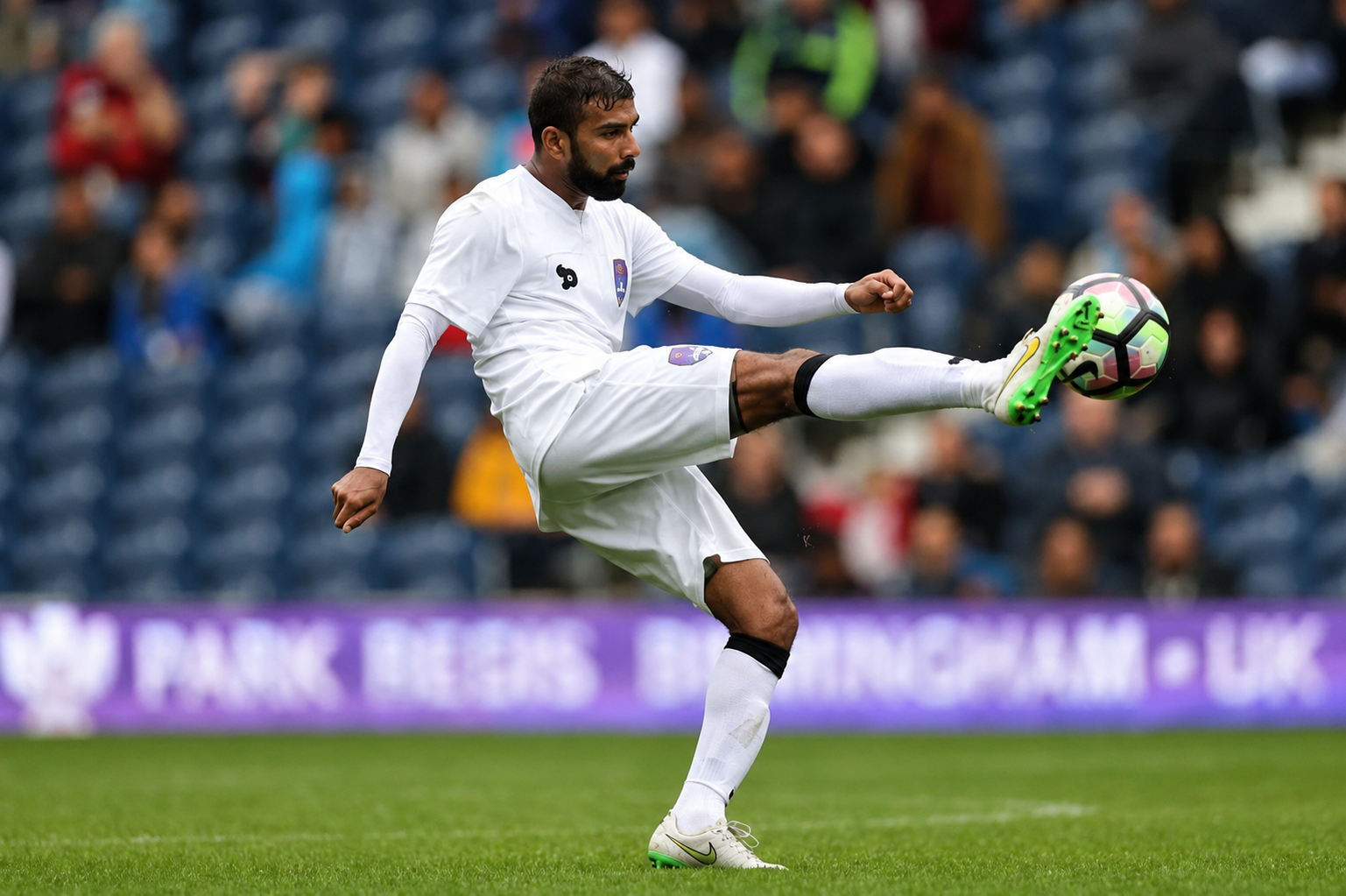

Kean Lewis has experienced Indian football from almost every angle. From earning an opportunity with Leicester City’s academy as a teenager to starring in the ISL and later building a career in coaching, his journey reflects both the opportunities and challenges within Indian football. In this exclusive conversation with Athletic India, Lewis opens up about the moments that shaped his career, the setbacks that tested him, and the evolution of Indian football.
- 1. Before turning professional, you had the opportunity to participate in trials with Leicester City at a young age. How did that opportunity come, and what was that experience like?
- 2. You developed through Tata Football Academy and Mahindra United’s youth setup before moving to the United States to continue your football journey. Looking back, how would you compare these different developmental environments in terms of coaching, professionalism, player development, and football culture? What lessons do you think Indian football can adopt from your experiences abroad?
- 3. Looking back at your developmental years, were there any coaches, mentors, or teammates who had a particularly strong influence on your footballing philosophy and career trajectory?
- 4. Your breakthrough season came with Delhi Dynamos in the 2016 ISL, where you emerged as one of the league’s standout Indian players. Looking back, what do you think clicked for you that season? Was it confidence, opportunity, the team’s playing style, or something else?
- 5. After your standout performances in the 2016 ISL, there was a feeling that you were on the verge of establishing yourself as one of India’s leading attacking players. However, the next phase of your career did not quite build on that momentum. Looking back, what do you think could have gone better? Did injuries or other challenges hamper the expected trajectory of development?
- 6. Having played across different eras of Indian football, from the pre-ISL period (in youth football) to the current professional landscape, how do you assess the progress Indian football has made? Where do you think the game has improved the most, and where does it still lag?
- 7. Indian attacking players are often deployed in deeper or more defensive roles in many ISL teams, while foreign players occupy the advanced attacking positions. While adapting to different tactical roles is part of professional football, do you think this trend has affected the development of Indian forwards and creative attackers?
- 8. You have built an impressive profile beyond your playing career, earning UEFA C and AFC B coaching licenses while also working as a football pundit, nutritionist, sports psychology practitioner, and performance coach. What motivated you to invest in so many different aspects of the game, and do you think current players should actively pursue such qualifications, either as a passion project or as preparation for life after football?
- 9. As someone who has experienced football as a player and coach, how has your understanding of the game evolved over the years? Are there aspects of football that you view very differently today compared to when you were playing?
- 10. From your experience as a coach, what qualities do you believe separate young players who make it to the professional level from those who do not? What are some common mistakes you see among aspiring footballers?
1. Before turning professional, you had the opportunity to participate in trials with Leicester City at a young age. How did that opportunity come, and what was that experience like?
The opportunity came through PIFA, who were affiliated with the Bobby Charlton Soccer School in the UK at the time. I had attended several of their camps and performed well in both the training sessions and the assessments they conducted. Based on those performances, I was invited to Leicester City.
I went there as part of their off-season program and spent about two months training and playing in that environment. It was an incredible experience because it gave me my first real exposure to the standards, intensity, and professionalism of an English club setup. I learned a lot, both on and off the pitch.
During the off-season campaign, I finished as the top scorer, and as a result, Leicester City offered me a place in their academy. However, for me to join, my family would have had to relocate and live within a 10-mile radius of the club. At that point, our family wasn’t in the strongest financial position, and there was no certainty that football would become a professional career for me. After a lot of consideration, we decided it was best for me to return to India and continue my development here.
Looking back, it was a fantastic opportunity and a defining experience in my journey. While I wasn’t able to join the academy, it gave me confidence that I could compete at a high level and motivated me to keep working towards becoming a professional footballer.
2. You developed through Tata Football Academy and Mahindra United’s youth setup before moving to the United States to continue your football journey. Looking back, how would you compare these different developmental environments in terms of coaching, professionalism, player development, and football culture? What lessons do you think Indian football can adopt from your experiences abroad?
I was fortunate to develop in some excellent environments during my formative years, and each experience contributed to my growth in different ways.
Mahindra United was a particularly important step in my journey. At the time, they had their own grass training ground in Kandivali, which was about 45 minutes from my home. Having access to a dedicated grass pitch was not very common then, and it was one of the main reasons I chose to train and play with them. The coaching staff included Santosh Kashyap and Vivek Nagul, both of whom played a significant role in my development. The environment was professional, competitive, and focused on helping young players improve every day.
Tata Football Academy was a completely different experience. It was an environment where football became your entire life—eat, sleep, and breathe football. You were surrounded by some of the best young players in the country, all competing and pushing each other to improve. We had the privilege of learning under coaches such as Rajan Choudhary, Carlton Chapman, and
Vijay Kumar, who brought a wealth of experience and knowledge. TFA taught me discipline, resilience, and what it takes to pursue football at the highest level in India.
When I moved to the United States, the biggest difference I noticed was the infrastructure surrounding player development. There was a far greater emphasis on sports science, strength and conditioning, nutrition, recovery, performance analysis, and individualized development plans. Players had access to resources that supported every aspect of their growth, not just what happened during training sessions.
Another major difference was the integration of sport and education. In the United States, athletes are not forced to choose between academics and football. Schools and universities provide pathways that allow players to pursue both simultaneously. That creates more opportunities and gives young athletes greater security while continuing to develop their sporting careers.
If there’s one lesson Indian football can take from my experiences, it’s that success requires long-term commitment to a process. Too often, progress is slowed by politics and bureaucracy. Talent has never been India’s problem. The challenge has been creating systems that consistently support and develop that talent over time.
Investment in sport cannot be occasional or reactionary—it has to be continuous. Results come from a process that requires belief, patience, proper planning, and sustained financial backing. Countries that succeed in sport understand that development happens over years, not months.
I also believe the education system needs to evolve. Young athletes in India are often forced to choose between studies and sport at a very early age. The academic burden and emphasis on traditional educational pathways can sometimes limit opportunities for talented athletes. We should be creating systems that allow young people to pursue both education and sport without feeling like they have to sacrifice one for the other.
India has the talent, the passion, and the potential. If we can reduce the bureaucratic obstacles, invest consistently in development, and build stronger links between education and sport, I believe Indian football can reach a much higher level in the years to come.
3. Looking back at your developmental years, were there any coaches, mentors, or teammates who had a particularly strong influence on your footballing philosophy and career trajectory?
Absolutely. I’ve been fortunate to learn from a number of coaches, mentors, and teammates throughout my journey, and each of them has influenced me in different ways.
During my early years, coaches like Santosh Kashyap and Vivek Nagul at Mahindra United played an important role in my development. At Tata Football Academy, learning under Rajan Choudhary, Carlton Chapman, and Vijay Kumar helped lay the foundation for my career. TFA was a highly competitive environment where discipline, professionalism, and a strong work ethic were expected every day.
One of the most transformative periods of my development came during my time in the United States. At university, coaches Seth Roland, Alex Pazuchi, and Orce Kozeski played a huge role in my evolution as a player. Up until that point, I had largely developed as an attacking player, but they helped transform me into a winger by improving my tactical understanding of the game. They taught me how to read different moments, understand space, recognize defensive responsibilities, and become a more complete player. That tactical awareness became a major part of my game moving forward.
After university, I spent a couple of years playing in Houston for multiple clubs and continued learning from some excellent coaches. James Clarkson and Owen Coyle at Houston Dynamo had a significant influence on my understanding of professional football and high-performance environments. Brendan Keyes at Houston Hurricanes was another coach who played an important role during that stage of my career, giving me my initial opportunities in Houston.
Coaching also became a major part of my journey. I had the opportunity to work within the Houston Dynamo Academy, where I coached alongside Lee Cullip, who is currently the Director at TTI. Working in that environment allowed me to see player development from a completely different perspective and helped shape many of my coaching philosophies today. I still enjoy returning and contributing during the summers whenever possible.
Back in India, I was fortunate to play under a number of highly respected coaches across the I-League and ISL, including Kibu Vicuña, Andrey Chernyshov, Carles Cuadrat, Gerard Zaragoza, Carlos Vaz Pinto, Gianlucca Zambrota, and Ed Englestad. Each coach brought a different philosophy, methodology, and perspective on the game. Experiencing those different styles helped me develop a broader understanding of football and reinforced the idea that there is never just one way to achieve success.
Having said that, some of the biggest influences on my career haven’t necessarily been coaches. People like Pradyum Reddy have had a tremendous impact on my development and thinking.
Sometimes a mentor’s influence extends beyond tactics or training sessions. They help shape your perspective, challenge your thinking, and guide important decisions throughout your career.
Looking back, I don’t think there is one single individual who shaped my footballing philosophy. Rather, it is the collective influence of all these coaches, mentors, teammates, and experiences.
Every environment taught me something different. Some taught me tactical details, others taught leadership, professionalism, communication, or player management. Together, those lessons have shaped not only the player I became but also the coach and educator I am today.
4. Your breakthrough season came with Delhi Dynamos in the 2016 ISL, where you emerged as one of the league’s standout Indian players. Looking back, what do you think clicked for you that season? Was it confidence, opportunity, the team’s playing style, or something else?
Looking back, I think it was a combination of preparation, opportunity, and belief coming together at the right moment.
Before joining Delhi Dynamos, I was with Mohun Bagan, one of the biggest clubs in Indian football. The squad was filled with national team players and established stars, which meant opportunities were difficult to come by. As a young player, it can be frustrating when you’re not getting regular minutes, but I never allowed that to affect my work ethic. Whether I was playing or not, whether the team was travelling or not, I continued to train every day and focus on improving.
When the opportunity came to join Delhi Dynamos on loan for the ISL season, I saw it as a chance to prove myself. I arrived hungry and motivated because I felt I had a lot to show but hadn’t yet been given the platform to do it consistently.
A huge part of what made that season successful was the environment created by Gianluca Zambrotta and Simone Barone. Having two World Cup winners leading the team brought a different level of professionalism, belief, and tactical understanding. They trusted Indian players and gave us confidence to express ourselves. As a player, that trust is invaluable. When a coach believes in you, you start believing even more in yourself.
The style of football also suited my strengths. We wanted to play, dominate possession, attack with purpose, and create chances. As a winger, I was encouraged to be aggressive, take on defenders, get into dangerous areas, and influence games. That freedom allowed me to play with confidence and showcase the qualities that had brought me to that level in the first place.
Confidence definitely grew throughout the season, but I don’t think confidence came first. Confidence was a result of being prepared and being given an opportunity. Once I started performing well, that belief naturally grew with every match.
What people often see is the breakout season, but they don’t always see the years that come before it. The reality is that season was built on everything that had happened previously—the experiences at Tata Football Academy, the lessons learned in the United States, the setbacks, the periods where I wasn’t playing, and the discipline to keep working regardless of the circumstances.
In many ways, 2016 wasn’t a sudden breakthrough. It was years of preparation finally meeting an opportunity. Delhi Dynamos gave me the platform, Gianluca Zambrotta and Simone Barone gave me the confidence and guidance, and I was ready when the chance came. That’s why that season remains such a special part of my career.
5. After your standout performances in the 2016 ISL, there was a feeling that you were on the verge of establishing yourself as one of India’s leading attacking players. However, the next phase of your career did not quite build on that momentum. Looking back, what do you think could have gone better? Did injuries or other challenges hamper the expected trajectory of development?
Looking back, injuries were certainly one of the biggest factors. After the 2016 ISL season, there was a lot of momentum and expectation surrounding my career. I felt I had finally established myself on a national stage and was looking forward to building on that progress.
Unfortunately, my move to Pune City didn’t quite live up to expectations. I struggled with injuries during pre-season, which is one of the most important periods for any player. That’s when you’re building fitness, developing relationships with teammates, understanding the coach’s system, and laying the foundation for the season ahead. Missing significant portions of that period put me on the back foot from the start, and it became difficult to find rhythm and consistency.
Injuries are challenging not only physically but mentally as well. When you’ve built momentum and are eager to take the next step in your career, being sidelined can be frustrating. Looking back, that period definitely disrupted the trajectory that many people expected after 2016.
Having said that, football has a way of testing your resilience. The following season, I moved to Bengaluru FC, and that turned out to be another important chapter in my career. We went on to win the ISL title, which was a fantastic achievement and a reminder that setbacks don’t necessarily define your future. Success doesn’t always happen in the way or timeline you expect, but if you continue working and stay patient, opportunities can come again.
More broadly, I’ve learned that football careers are rarely linear. From the outside, people often expect a steady upward progression, but the reality is that there are highs, lows, injuries, coaching changes, competition for places, and countless factors that influence a player’s journey.
Of course, there are things that could have gone better, and every player looks back at certain moments wondering ‘what if.’ But I don’t believe in dwelling on those thoughts. Every experience taught me something. The successful periods gave me confidence, while the difficult periods taught me resilience, patience, and perspective.
In the end, I’m proud of the journey. Not every chapter went exactly as planned, but each one contributed to my development both as a player and as a person. Those experiences continue to shape how I approach football and how I work with young players today.
6. Having played across different eras of Indian football, from the pre-ISL period (in youth football) to the current professional landscape, how do you assess the progress Indian football has made? Where do you think the game has improved the most, and where does it still lag?
There’s no doubt that Indian football has made significant progress from when I was growing up as a young player.
When I was coming through the system, opportunities were far more limited. Exposure was limited, facilities were inconsistent, and there wasn’t the same level of professionalism that exists today. The introduction of the ISL brought greater visibility, investment, professionalism, and commercial interest to the sport. Players today have access to better facilities, improved support staff, better pitches, sports science departments, analysts, nutritionists, and strength and conditioning coaches. Those are all positive developments that have helped raise professional standards.
I also think young players today have more role models and more belief that football can be a viable career. When I was growing up, there were far fewer examples of players making a living from the game. Today, young footballers can see a clearer pathway from grassroots football to professional football.
That said, I think we’re still some distance away from where we need to be.
One area where I believe we continue to lag is long-term planning and continuity. Too often, decisions in Indian football are driven by short-term results rather than a long-term development process. Successful football nations invest in development over decades, not just a few seasons. They trust the process, maintain consistency, and continue investing regardless of immediate outcomes.
Another challenge remains the politics and bureaucracy within the system. Football development should be driven by expertise, merit, and long-term vision. Unfortunately, there are still too many obstacles that slow progress and make it difficult to build sustainable structures. If we want Indian football to truly move forward, there needs to be greater alignment between stakeholders and a stronger focus on development rather than administration.
I also believe government investment in sport needs to be more consistent. Success in football isn’t something that can be achieved through occasional funding or short-term projects. Results come from a process that requires belief, patience, infrastructure, and sustained financial support over many years. Countries that succeed in football understand that investment in youth development, coach education, facilities, and grassroots participation is a long-term commitment.
Perhaps the biggest area where I feel change is needed is the relationship between education and sport. One of the biggest differences I noticed during my time in the United States was that athletes weren’t forced to choose between academics and football. The systems worked together. In India, many young athletes still feel they must choose one path or the other at a very early age.
The academic burden and emphasis on traditional educational success can sometimes make it difficult for talented young athletes to fully pursue their sporting ambitions. We should be creating more flexible pathways that allow students to excel both academically and athletically. Not every young footballer will become a professional, but they should still have the opportunity to chase that dream without sacrificing their education.
Ultimately, India has never lacked talent. Every year I see young players with tremendous ability. What we need is a stronger ecosystem around them—better grassroots structures, continued investment in coach education, reduced bureaucracy, stronger school and university sports programs, and a commitment to long-term development.
The progress has certainly been positive, but the next step for Indian football isn’t just producing better players—it’s building better systems. If we can do that consistently, I believe the future of Indian football is very bright.
7. Indian attacking players are often deployed in deeper or more defensive roles in many ISL teams, while foreign players occupy the advanced attacking positions. While adapting to different tactical roles is part of professional football, do you think this trend has affected the development of Indian forwards and creative attackers?
I think it has definitely had an impact, and it’s something we’ve seen consistently over the years.
Football is ultimately a results-driven business, and coaches will always make decisions they believe give their teams the best chance of winning. Because foreign players are often brought in to be the primary goal scorers and creators, Indian players frequently find themselves playing supporting roles around them.
The challenge is that attacking players develop through repetition. Strikers learn how to score goals by playing as strikers. Playmakers develop creativity by consistently being responsible for creating chances. Wingers improve by being encouraged to take risks, attack defenders, and make decisive actions in the final third.
Over the years, we’ve seen many Indian strikers converted into wide players or deeper attacking midfielders, while others simply find themselves sitting on the bench behind foreign forwards. Then when it comes to the national team, we ask why India isn’t producing enough goalscorers or why our strikers aren’t scoring consistently. The reality is that many of those players spend the majority of their club careers either playing out of position or not playing in those attacking roles at all.
It’s very difficult to expect a player to suddenly become a prolific striker for the national team when they haven’t been consistently playing as a striker for their club. Confidence, movement, decision-making, finishing, and game awareness in those positions all come from regular match experience.
That’s not to say players shouldn’t be adaptable. Modern football requires versatility, and the best players can perform multiple roles. But there still needs to be a pathway for Indian attacking players to develop as genuine goalscorers and creators.
If we want better attacking output from the national team, we need more Indian players regularly occupying those key attacking positions at club level. They need to experience the pressure of
being the player expected to score goals, create chances, and win matches. That’s how elite attacking players are developed.
We’ve made significant progress in many areas of Indian football, but producing top-level attacking players remains one of the biggest challenges. Until Indian players are given more opportunities to consistently play and develop in those decisive attacking roles, it will be difficult to close that gap at the international level.
Ultimately, national team success is usually a reflection of what players are doing week in and week out at their clubs. If we want Indian forwards scoring more goals for India, we first need to create environments where they are trusted to score goals for their clubs.
8. You have built an impressive profile beyond your playing career, earning UEFA C and AFC B coaching licenses while also working as a football pundit, nutritionist, sports psychology practitioner, and performance coach. What motivated you to invest in so many different aspects of the game, and do you think current players should actively pursue such qualifications, either as a passion project or as preparation for life after football?
A lot of it comes down to timing and mindset.
As I matured as a player, I realized there was time available away from training, matches, and travel that could be used productively. Education and continuous self-improvement have always been a big part of my family culture. Growing up in a family that wasn’t directly involved in sport, the advice I would constantly hear during the off-season or whenever I was back home was, “Go do a course and upgrade yourself.”
Naturally, I gravitated towards areas related to football and sport. I wanted to learn things that would not only help me perform better as a player but would also benefit me as a coach and as a professional beyond my playing career. That’s how I found myself pursuing coaching licenses, nutrition qualifications, sports psychology studies, performance coaching, and media work.
That said, some of those qualifications also came about because of circumstances in my life rather than a long-term plan.
During the COVID lockdowns, like many athletes, I suddenly found myself spending long periods of time away from training and competition. For older athletes who were back home with their families, confined to one place and unable to do what we had spent our lives doing, it was a challenging period mentally. I became increasingly interested in understanding how people think, cope with adversity, stay motivated, and manage uncertainty. That experience ultimately led me to pursue my sports psychology certification.
Another major influence was my father’s health. A few years ago, he suffered a heart attack and experienced multiple complications that kept him in the hospital for more than 45 days. Going through that as a family made me realize how important nutrition and lifestyle choices are, not just for athletes but for everyone. As we began making significant changes to his eating habits and daily routines, I wanted to better understand the science behind those decisions. That was what motivated me to pursue a formal nutrition qualification.
I already had a foundation in nutrition through my Sports Management degree in the United States and from years of working within professional football environments. However, I wanted a deeper level of knowledge so I could make informed decisions and better support those around me. The qualification gave me the confidence to understand not only what changes should be made, but also why they should be made.
The nutrition side has benefited me personally as a player as well. It has helped me better understand fueling, recovery, body composition, and performance. It’s also something I actively advocate to the players and students I coach. Young athletes often focus heavily on training but underestimate the impact that proper nutrition can have on their development, recovery, and overall performance.
For me, learning has never been about collecting certificates. It’s about gaining knowledge that has practical value. Understanding nutrition helped me become a better athlete. Learning about sports psychology gave me a deeper understanding of confidence, motivation, and performance under pressure. Coaching education helped me see the game through a completely different lens and improved my tactical understanding as a player.
Sport is also a mental game. We spend a lot of time talking about keeping the body fit and healthy, but it’s equally important to keep the mind sharp. Continuous learning challenges you, keeps you engaged, and helps you grow as a person. I genuinely believe that developing yourself intellectually can have a positive impact on your sporting performance as well.
Another reality is that every football player eventually reaches the end of their playing career. That’s one thing that is guaranteed. Whether it happens at 30, 35, or 40, the playing chapter eventually closes. I’ve always wanted to be prepared for that moment rather than be surprised by it.
Because of that, I’ve tried to build a profile that extends beyond being just a football player. I’ve been intentional about developing skills and gaining experience in different areas of the industry so that when my playing career ends, the transition won’t be difficult. In many ways, I feel like I’ve been preparing for that next chapter throughout my career.
That’s why I encourage current players to explore interests outside of playing. It doesn’t necessarily have to be coaching. It could be sports science, media, business, analytics, education, or something completely different. The important thing is to remain curious and continue developing yourself.
Football gives us a unique platform, but our identity shouldn’t be limited to what we do on the pitch. The more skills, experiences, and knowledge you accumulate throughout your career, the more opportunities you’ll create for yourself afterwards.
In my case, football will eventually end, but I’m confident that when that day comes, I’ll be ready for whatever comes next. I’ve spent years preparing not just my game, but also my CV. Looking back, many of these qualifications were a combination of curiosity, opportunity, and life experiences. Some came from wanting to become a better footballer, while others came from personal situations that sparked a desire to learn. In every case, the goal was the same: to gain knowledge that could have a meaningful and practical impact on my life and on the people around me.
9. As someone who has experienced football as a player and coach, how has your understanding of the game evolved over the years? Are there aspects of football that you view very differently today compared to when you were playing?
Without a doubt. In fact, I think the more I’ve learned about football, the more I’ve realized how much there is still to learn.
As a player, your world is naturally centered around your own performance. You’re focused on your position, your role, your preparation, and how you can help the team win. You see the game through a very specific lens. That’s not a bad thing—it’s necessary to perform at a high level—but it can limit your perspective.
Once I started coaching, studying player development, sports psychology, nutrition, and performance, I began to appreciate how many factors influence success beyond what happens during the 90 minutes of a match.
One of the biggest changes in my thinking is that I no longer see football purely as a tactical or technical game. Of course those elements are important, but today I view football much more as a people-centered profession. Managing personalities, understanding motivation, creating the right environment, building confidence, and developing relationships are often just as important as tactics.
As a younger player, I probably thought the best coach was the one with the best tactical knowledge. Today, I think the best coaches are the ones who can connect with people, communicate effectively, and create an environment where players can thrive. Tactics matter, but players have to believe in what they’re doing and feel supported in the process.
Another area where my perspective has changed is player development. When you’re young, it’s easy to think development is mostly about training harder and accumulating more hours on the pitch. Now I understand that development is much more complex. Every player develops differently. Some need confidence, some need structure, some need patience, and some simply need an opportunity.
Having played under coaches such as Kibu Vicuña, Carles Cuadrat, Gerard Zaragoza, Carlos Vaz Pinto, Andrey Chernyshov, Owen Coyle, James Clarkson, and many others, I’ve been exposed to very different coaching styles and philosophies. What’s interesting is that many of them achieved success in completely different ways. That taught me there is no single blueprint for success in football.
My studies in sports psychology have also had a major influence on how I view the game. Earlier in my career, I probably underestimated the mental side of performance. Today, I believe confidence, mindset, emotional control, resilience, and self-awareness can often be the difference between players of similar technical ability.
I also have a much greater appreciation now for the support staff behind a team. As players, we often take for granted the work done by analysts, physiotherapists, strength and conditioning coaches, nutritionists, sports psychologists, team managers, and administrators. Having worked across different roles, I understand how important each of those people is to creating a successful environment.
Perhaps the biggest difference is that I no longer judge football solely through results. As a player, you naturally focus on wins, losses, goals, assists, and trophies. As a coach and educator, I find myself paying much more attention to the process. Are players improving? Are they learning? Is the environment healthy? Are we building something sustainable?
Results will always matter, but I’ve come to appreciate that long-term success usually comes from getting the process right.
Ultimately, football has evolved from being simply a sport I played to a subject I study every day. The more experiences I’ve had—as a player, coach, educator, pundit, and practitioner—the more interconnected I realize everything is. That’s probably the biggest shift in my understanding of the game over the years.
10. From your experience as a coach, what qualities do you believe separate young players who make it to the professional level from those who do not? What are some common mistakes you see among aspiring footballers?
One of the biggest misconceptions young players have is that talent is what determines who becomes a professional footballer. Talent is important, but in my experience, it’s rarely the deciding factor.
I’ve worked with and played alongside many incredibly talented players over the years. Some went on to have successful professional careers, while others didn’t. The difference was often not ability, but qualities such as patience, discipline, preparation, consistency, coachability, and resilience.
Patience is a huge one. Young players today often want immediate results. They want to make the first team, sign a contract, or gain recognition as quickly as possible. But football development doesn’t work that way. Some players develop early, others later. The ones who
succeed are usually those who stay committed to the process and continue improving regardless of where they are in their journey.
Discipline and preparation are equally important. And when I talk about discipline, I’m not just talking about what happens on the training ground. I’m talking about the habits away from football as well. Too often, young players believe that if they just show up to training every day, they’ll become professionals. The reality is that training is only one part of the equation.
You have to sleep properly. You have to eat well. You have to recover correctly. You have to manage your time, take care of your body, and make good decisions away from the pitch.
Professional football is a lifestyle, not just a training session. The players who understand that early are usually the ones who give themselves the best chance of succeeding.
One quality I always look for is coachability. The best players are usually the ones who remain open to learning. They seek feedback, ask questions, adapt, and continuously look for ways to improve. The moment a player believes they have all the answers, their development often stalls.
Resilience is another trait that separates players. Every footballer will experience setbacks—injuries, non-selections, poor performances, difficult periods, and moments of self-doubt. The players who make it are often the ones who can navigate those challenges without losing their commitment to the game.
One quote that has always resonated with me is: ‘Character is what you are doing when no one is watching.’ I think that applies perfectly to football development. When the coach turns away, are you still doing the exercise properly? Are you honest with your repetitions? Are you putting in the extra work when nobody is monitoring you? Are you making the right decisions away from the training ground?
That’s where true professionalism begins. Anyone can work hard when they’re being watched. The players who make it are usually the ones who maintain high standards even when nobody is paying attention.
One of the most common mistakes I see among aspiring footballers is focusing too much on outcomes and not enough on daily habits. Players become obsessed with getting selected, signing contracts, making representative teams, or building a social media profile. Those things are outcomes. The players who eventually succeed are usually obsessed with the process.
Ultimately, the players who make it are not always the most talented. They’re often the ones who consistently do the simple things well, year after year. Talent might open the door, but patience, discipline, preparation, character, and daily habits are what keep you in the game.